
Keynote Speakers

Abstract
Historically, communication systems were engineered with a singular, overarching goal: to provide universal access to information, anytime, anywhere, and for anyone. This mission is particularly challenging for visual information. As a universal vector of exchange, images and video transcend linguistic barriers, while they require the transmission and storage of massive volumes of data. The development of highly efficient coding technologies, most notably the JPEG and MPEG image and video coding formats, successfully removed these technical barriers, facilitating the seamless access to visual information we rely on today.
However, as content creation becomes increasingly democratized, accelerated by the rapid rise of Generative AI, two critical challenges have emerged. First, in a seamlessly connected ecosystem, protecting the intellectual property of content creators and ensuring proper copyright attribution is paramount. Second, this frictionless accessibility can be weaponized by ill-intentioned actors to spread propaganda, deepfakes, and fraud.
To address these vulnerabilities, efficient visual formats must evolve beyond compression to natively support media authenticity and trust. In this talk, we will focus on this critical transition and introduce JPEG Trust (ISO/IEC 21617), a new international standard recently published by the JPEG standardization committee. JPEG Trust provides a robust, international framework for establishing trust in digital media assets, offering secure tools for provenance tracking and authenticity verification, while safeguarding authorship and ownership in an era where seeing is no longer believing.
Biography
Touradj Ebrahimi is a Professor of Image Processing at the École Polytechnique Fédérale de Lausanne (EPFL), where he directs the Multimedia Signal Processing Group (MMSPG). A globally recognized leader in media technologies and INternational standardization, he serves as the Convenor of the JPEG standardization committee.
Touradj Ebrahimi is a Professor of Image Processing at the École Polytechnique Fédérale de Lausanne (EPFL), where he directs the Multimedia Signal Processing Group (MMSPG). A globally recognized leader in media technologies and INternational standardization, he serves as the Convenor of the JPEG standardization committee.
Professor Ebrahimi’s recent research, entrepreneurial ventures, and standardization activities are heavily focused on visual information security, digital media authenticity, privacy preservation, and watermarking. Recognizing the emerging risks of synthetic media, his work establishes open, verifiable technological solutions for digital provenance. He is the founder of RayShaper SA, a Swiss deep-tech startup specializing in AI-powered computational vision. Throughout his career, Professor Ebrahimi has pioneered advancements in visual information coding, multimedia quality of experience, and media security, ranging from rights protection to integrity verification and privacy protection.
Professor Ebrahimi is a Fellow of the IEEE, SPIE, EURASIP, and AAIA.

Abstract
Visual quality assessment (VQA) aims to tell every imaging system, from cameras and codecs to AIGC models, whether it is doing its job, for human users and increasingly for machines, and has evolved from handcrafted signal features to deep predictors. Yet most systems merely return a scalar score with limited evidence of what degraded a signal, where problems lie, if the judgment could transfer beyond the data on which the model was trained, and what is the actionable improvement.
This talk argues that large multimodal models (LMMs) can help move VQA from scalar prediction toward evidence-grounded quality reasoning, in diversified scenarios. It first examines what LMMs can and cannot perceive about low-level visual quality, including subtle artifacts, spatial localization, and hallucination. It then discusses how to teach LMMs to use text-defined quality levels, provide localized quality diagnosis, and make pairwise comparisons—a setting that can be more stable than absolute scoring.
We then extend the discussion to AI-generated imagery, where perceptual quality, plausibility, and prompt consistency interact, and to machine-oriented quality, where the relevant observer is a downstream model and the criterion is task reliability rather than human preference.
It concludes with a research agenda: combining foundation models with perceptual priors such as masking, attention, and just-noticeable difference; evaluating explanation faithfulness and uncertainty; and addressing computational cost and temporal quality of long video. The goal is a quality assessor to assess, explain, compare, and more importantly, guide actions.
Biography
Weisi Lin is an active researcher in image and video processing, perception-based signal modelling and assessment, and multimedia communication. He had been the Lab Head, Visual Processing, Institute for Infocomm Research (I2R), Singapore. He is currently a President’s Chair Professor in College of Computing and Data Science, Nanyang Technological University (NTU), Singapore, where he also serves as the Associate Dean (Research). He is a Fellow of IEEE and IET.
Weisi Lin is an active researcher in image and video processing, perception-based signal modelling and assessment, and multimedia communication. He had been the Lab Head, Visual Processing, Institute for Infocomm Research (I2R), Singapore. He is currently a President’s Chair Professor in College of Computing and Data Science, Nanyang Technological University (NTU), Singapore, where he also serves as the Associate Dean (Research). He is a Fellow of IEEE and IET.
He has been awarded Highly Cited Researcher since 2019 by Clarivate Analytics, and elected for the Research Award 2023, College of Engineering, NTU. He has been a Distinguished Lecturer in both IEEE Circuits and Systems Society (2016-17) and Asia-Pacific Signal and Information Processing Association (2012-13), and an Associate Editor for IEEE Trans. Neural Networks Learn. Syst., IEEE Trans. Image Process., IEEE Trans. Circuits Syst. Video Technol., IEEE Trans. Multim., and IEEE Sig. Process. Lett., as well as a Senior Editor for IEEE J. Selected Topics in Sig. Process.
He served as a General Co-Chair for IEEE ICME 2025. He is the Lead General Chair for IEEE ICIP 2027, and has been a TP Chair for several international conferences.
He has led the Temasek Foundation Programme for AI Research, Education & Innovation in Asia, 2020-2024, and co-led the Foundational Research Capabilities (FRC) Study (2025-2027) on Augmented Reality and Industrial Metaverse, NRF, Singapore.
He believes that good theory is practical and has delivered 10+ major systems for industrial deployment with the technology developed.

Abstract
Video is occupying about 80% of today’s Internet traffic. Out of this, more and more video contents are consumed by machines, in broad applications such as video surveillance, healthcare monitoring, transportation, smart cities, etc.
Machine vision is different from human vision in many aspects, therefore video codecs optimized for human vision may be sub-optimal for machines. Great interests and demands have risen in recent years to develop video coding technologies and solutions for machine vision requirements and use cases.
This talk will introduce and discuss technology and standard development, applications, challenges, as well as envision future potentials that are related to video coding for machines (VCM).
Biography
Shan Liu (Fellow, IEEE) received her B.E. degree from Tsinghua University and her M.S. and Ph.D. degrees from University of Southern California. She held senior technical and management positions at Sony, MERL, MediaTek, etc. and is now a Distinguished Scientist and General Manager at Tencent.
Shan Liu (Fellow, IEEE) received her B.E. degree from Tsinghua University and her M.S. and Ph.D. degrees from University of Southern California. She held senior technical and management positions at Sony, MERL, MediaTek, etc. and is now a Distinguished Scientist and General Manager at Tencent.
She is the author of 150+ peer-reviewed papers, 200+ standard essential patents, one book and recipient of many awards, including IEEE Circuits and Systems Society Industrial Pioneer Award (2026), IEEE SA Standards Medallion (2025), ISO/IEC Excellence Award (2024), USC SIPI Distinguished Alumni Award (2023), Technology Lumiere Award (2022) and IEEE TCSVT Best AE Awards (2020, 2019).
She has served as General Chair and Area Chair for many international conferences. She is currently the Editor-in-Chief of IEEE Transactions on Circuits and Systems for Video Technology, as well as on multiple technical and standard boards and committees.
She was one of the first to investigate Video Coding for Machines (VCM) and has been chairing MPEG VCM since 2020, leading the standard development towards finalization.
Her research focuses on compression, intelligence and systems of audio-visual, volumetric and immersive multimedia.
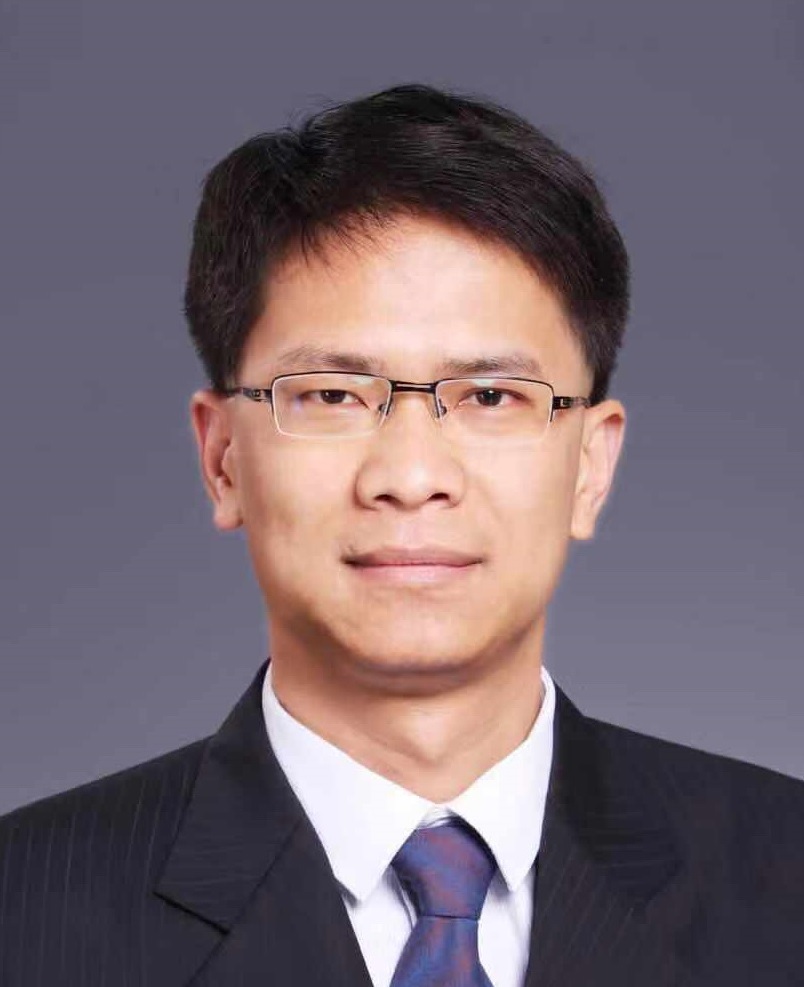
Abstract
Embodied intelligence is a hot and important research topic in the fields of artificial intelligence and robotics, with significant application prospective in manufacturing, agriculture, and service industry. This talk will present recent major advancements in embodied intelligent perception and manipulation, covering methodologies and technologies such as online perception, autonomous navigation, mobile manipulation, and intelligent control.
It will also explore applications in areas like modern services, industrial manufacturing, deep-sea exploration, and low-altitude security, concluding with an outlook on future development trends.
Biography
Jiwen Lu (IEEE/IAPR Fellow) received the B.Eng. degree in Mechanical Engineering and the M.Eng. degree in Electrical Engineering from Xi'an University of Technology, Xi'an, China, in 2003 and 2006, respectively, and the Ph.D. degree in Electrical Engineering from Nanyang Technological University, Singapore, in 2011. From 2011 to 2015, he was a Research Scientist with the Advanced Digital Sciences Center, Singapore. In November 2015, he joined the Department of Automation at Tsinghua University, where he is currently a tenured Full Professor and Associate Chair of the department.
Jiwen Lu (IEEE/IAPR Fellow) received the B.Eng. degree in Mechanical Engineering and the M.Eng. degree in Electrical Engineering from Xi'an University of Technology, Xi'an, China, in 2003 and 2006, respectively, and the Ph.D. degree in Electrical Engineering from Nanyang Technological University, Singapore, in 2011. From 2011 to 2015, he was a Research Scientist with the Advanced Digital Sciences Center, Singapore. In November 2015, he joined the Department of Automation at Tsinghua University, where he is currently a tenured Full Professor and Associate Chair of the department.
His research interests include computer vision, pattern recognition, embodied intelligence, and artificial intelligence safety. He has been actively involved in IEEE technical activities, serving as a member of the Multimedia Systems and Applications Technical Committee (MSA TC) and the Visual Signal Processing and Communications Technical Committee (VSPC TC) of the IEEE Circuits and Systems Society, as well as the Image, Video and Multidimensional Signal Processing Technical Committee (IMVSP TC), Multimedia Signal Processing Technical Committee (MMSP TC), and Information Forensics and Security Technical Committee (IFS TC) of the IEEE Signal Processing Society.
Professor Lu has taken leadership roles in major international conferences, serving as General Co-Chair of the IEEE International Conference on Multimedia and Expo (ICME) 2022, Program Co-Chair of the Asian Conference on Computer Vision (ACCV) 2026, ICME 2020, IEEE International Conference on Automatic Face and Gesture Recognition (FG) 2023, IEEE International Conference on Visual Communication and Image Processing (VCIP) 2022, and IEEE International Conference on Advanced Video and Signal-based Surveillance (AVSS) 2021.
He has served as Co-Editor-in-Chief of Pattern Recognition Letters, Senior Associate Editor for IEEE Transactions on Circuits and Systems for Video Technology, and Associate Editor for IEEE Transactions on Image Processing, IEEE Transactions on Multimedia, IEEE Transactions on Circuits and Systems for Video Technology, IEEE Transactions on Biometrics, Behavior, and Identity Sciences, Pattern Recognition, and Journal of Visual Communications and Image Representation.
He was a recipient of the National Natural Science Fund for Distinguished Young Scholars and is an IEEE Fellow and IAPR Fellow.